Economics & Finance
Crisis and price caps: from Chancellor Ferrer to Commissioner Arcuri
1) Arcuri’s order on face masks
On 26 April, Prime Minister Giuseppe Conte announced at a press conference the measures to contain the Covid-19 emergency in “phase two”. Among the various initiatives, Conte announced that the Extraordinary Commissioner Domenico Arcuri had signed an order capping the price of so-called surgical masks at a maximum of €0.50 excluding VAT.
2) Price caps and historical examples
This measure is one of the many examples of price controls in times of crisis. What is a price cap? It is when a government decides to set a ceiling on the selling price of a good, usually an essential one, in order to curb speculation and make it affordable to every segment of the population.
The Conte government is certainly not the first to take decisions of this kind, and history offers a multitude of comparisons.
One of the earliest historical examples on Italian soil was the lex frumentaria of Gaius Sempronius Gracchus, tribune of the plebs in Rome from 123 to 121 BC. Under this lex, the treasury bought grain in Sicily and Asia and then resold it in Rome at much lower prices. The measure was greeted with jubilation by the populares and with scepticism by the optimates, who feared it served only to curry favour with the plebs. Within a few years it caused the price of grain to fall across the entire domestic market and led Sulla to suspend it. Gaius Gracchus was only the first example of the so-called panem et circenses, the phrase Juvenal uses in his Satires to describe the demagogic methods of rulers who secured popular consent by distributing grain and staging grand public spectacles.
Another famous example is the bread riot recounted by Alessandro Manzoni in The Betrothed. In 1627–28, bad weather and the devastation of the land by war had caused a shortage of grain and hence a famine. This led to a steep rise in the price of grain and bread, inflaming the discontent of the people, who believed it was due to the greed of landowners and bakers. The Grand Chancellor of Milan, Antonio Ferrer, therefore decided to cap the price of grain at less than half of its selling price at the time. The hungry populace rejoiced and flocked to the bakeries, but within a few weeks grain reserves were almost exhausted and lifting the cap became inevitable. This triggered the famous riot of 11 November, narrated in Chapter XII, in which the crowd stormed and destroyed the city’s bakeries. Manzoni comments on the events with marked irony: “the multitude had wanted to bring forth abundance through looting and arson”, while “the government wanted to maintain it with the galleys and the rope”. It is worth noting that the author’s view does not stem only from his standing as a writer, but also from his role as a landowner devoted to agriculture and familiar with the dynamics of supply and demand.
3) Criticism of Arcuri
Back to the present day: criticism of the order signed by Commissioner Arcuri was not long in coming, and it brought three main problems to light. The first complaints came from pharmacists’ associations, who protested that they had paid well over 50 cents for the masks and had been forced to halt new orders to avoid booking losses. As a result, many pharmacies temporarily suspended sales to avoid losses or penalties. Only a few days later did the commissioner announce that an agreement had been reached to guarantee supplies to pharmacies and drugstores and to set out “forms of compensation” for them to avoid losses.
The second problem concerns supermarkets and other retailers. Many of them, like pharmacies, had already bought supplies of masks at prices above 50 cents. This led the Crai Group, which brings together brands such as Crai, IperSoap, Saponi e Profumi and others, to withdraw surgical masks from sale rather than sell them below their purchase cost. Federdistribuzione and Acnd Conad joined the dispute, demanding the same cost coverage granted to pharmacies and warning that otherwise the product would no longer be offered to customers.
The third and final problem involves producers, especially those that had converted their production to masks to deal with the emergency. One Tuscan entrepreneur says she answered the Chamber of Commerce’s appeal and received authorisation after three weeks of red tape. Now, however, selling the masks at the capped price would not even cover labour costs. Her situation is shared by many others like it, as well as by small producers who inevitably face higher costs and cannot compete with Asian manufacturers.
Indeed, even the Civil Protection Department paid more than €0.50 for them, despite buying directly and in large volumes. Data on procurement contracts for personal protective equipment show that the Japanese firm Tokyo Medical Consulting sold Italy 260,000 masks at €1.67 each. Not exactly a competitive price.
4) Consequences
To sum up, the government arbitrarily set the price of a device whose use is legally mandatory when moving around. First it hurt the main retail distributors, pharmacists, but once it realised the problem it made amends by covering any losses. Then it hurt the second-largest retail distributors, supermarkets, this time without yet announcing any financial support. Finally, it hurt the Italian producers who had decided to convert their production to keep their businesses afloat. All this while going on to buy masks, including from abroad, at prices higher than the ones it had set. The obvious consequences of this order will be damage along the entire supply chain and lower domestic production and distribution, which will create huge risks of shortages and of the speculative reselling that never fails to appear under such price regimes. Commissioner Arcuri limited himself to this comment: “I would very much like to talk about the free-marketeers who, from their sofas, between a cocktail and a video message, hand down verdicts every day, but I won’t.”
So an appeal, made with a spritz in hand, is in order: would it not have been better to give incentives to Italian companies, including the smallest ones and those that had converted their production, to make masks at lower cost, and meanwhile hand them out free of charge to those most in need? Under this system everyone risks being left without masks, free-marketeers on the sofa and everyone else.
P.S.
The consequences of capping the price of funerals deserve an honourable mention in this article, but for that I refer you to this piece:
5) Bibliography
- http://www.salute.gov.it/portale/nuovocoronavirus/dettaglioNotizieNuovoCoronavirus.jsp?lingua=italiano&menu=notizie&p=dalministero&id=4613
- William Smith, "Frumentariae Leges", in A Dictionary of Greek and Roman Antiquities, London, John Murray, 1875, pp. 548-551
- https://digilander.libero.it/syntmentis/Storia/Roma/Roma19.htm
- http://www.treccani.it/vocabolario/panem-et-circenses/
- https://promessisposi.weebly.com/capitolo-xii.html
- https://www.confcommerciotrieste.it/it/news/rassegna-stampa/mascherine-a-prezzo-politico-perplessita-e-critiche-dai-farmacisti.html
- https://www.infodata.ilsole24ore.com/2020/05/02/mascherine-50-centesimi-prezzi-calmierati-libero-mercato-anche-la-protezione-civile-le-paga-piu/
- https://iltirreno.gelocal.it/empoli/cronaca/2020/05/01/news/il-prezzo-calmierato-delle-mascherine-non-copre-i-costi-della-produzione-1.38794624
- https://www.ansa.it/sito/notizie/economia/2020/04/29/gruppo-crai-ritira-le-mascherine-dai-negozi-50-centesimi-prezzo-troppo-basso_ddb08459-a9b5-40c3-aa39-4a95096fbd7d.html
- https://www.iltempo.it/cronache/2020/04/30/news/coronavirus-caos-mascherine-altro-che-prezzi-calmierati-farmacie-supermercati-rivolta-premier-giuseppe-conte-commissario-domenico-arcuri-1321796/
- https://www.ecodibergamo.it/stories/bergamo-citta/caos-mascherine-farmacisti-e-grossisticol-prezzo-a-050-e-tutto-bloccato_1351915_11/
- https://www.ansa.it/sito/notizie/politica/2020/04/29/arcuri-non-si-puo-prevedere-per-quanto-le-attivita-saranno-limitate_fb64e7de-60a4-4502-84fa-fc193c799b28.html
- https://www.lastampa.it/cronaca/2020/04/27/news/accordo-tra-arcuri-e-i-farmacisti-rimborsi-per-le-mascherine-pagate-piu-di-50-centesimi-1.38768827
Views expressed in articles are the authors' own and do not necessarily represent those of the association or of Bocconi University.
Little else is requisite to carry a state to the highest degree of opulence from the lowest barbarism, but peace, easy taxes, and a tolerable administration of justice.
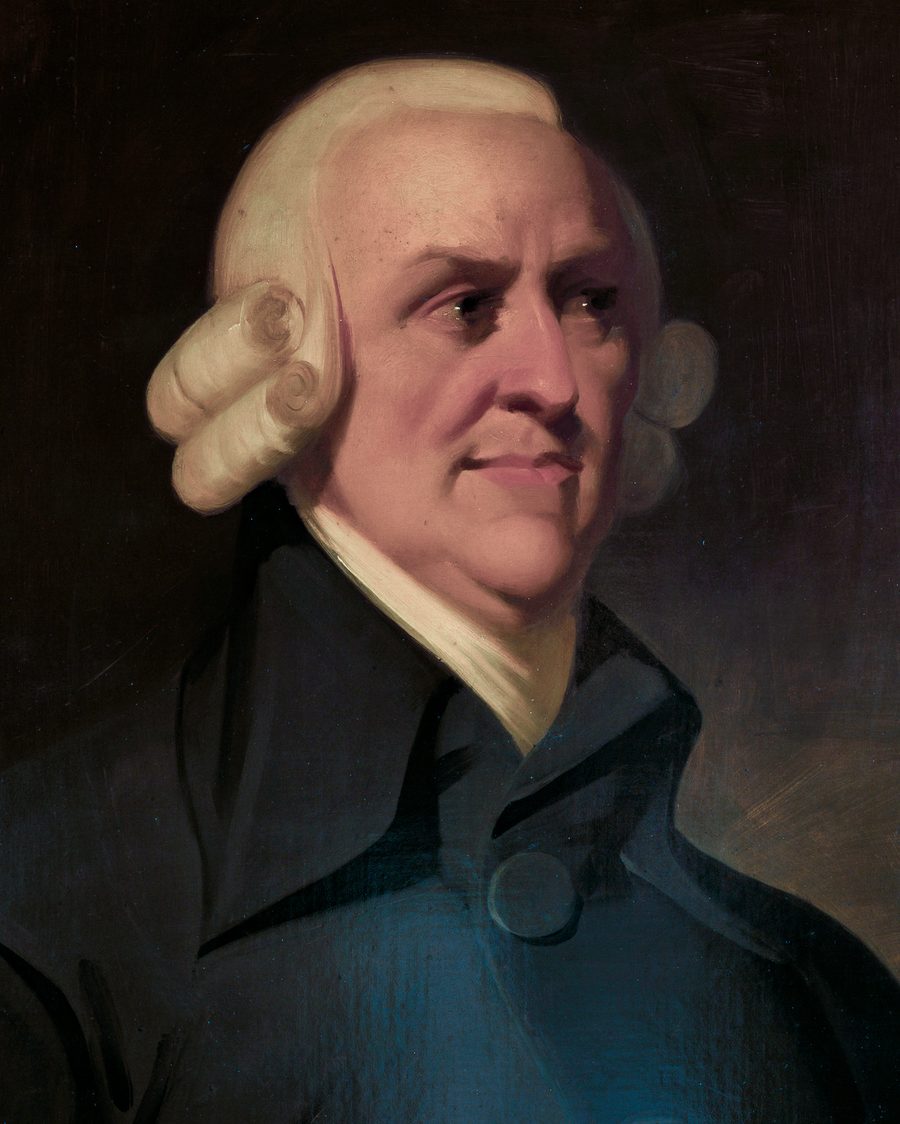 Adam Smith1755 lecture, reported by Dugald Stewart