Politics
Let’s abolish Consip
“At least half of the ventilators from the Consip tender will be delivered after the emergency is over.” These were the words, a few days ago, of the extraordinary commissioner Domenico Arcuri, appointed by the government to deal with the Covid-19 emergency. The quotation perfectly captures how the cumbersome nature of Italian bureaucratic procedures and their endless delays have a devastating effect on the system; in this case in the worst way imaginable, putting the lives of many citizens at risk.
The great fight against corruption – legitimate and worth supporting – has led, especially in recent years, to an expansion of Italy’s already massive bureaucracy. The public procurement code has grown to disproportionate size and is subject to constant amendments that often prevent it from being applied with any certainty; consider, for example, the tendency of the courts to widen the scope for finding liability for damage to the public purse even in cases of gross negligence (and thus not only where there is intent).
But the real question is this: in a moment of extreme emergency, did we really need to follow Consip’s (lengthy) procurement procedure?
We are facing an unprecedented emergency and we have been unable to manage it and treat it as such. This situation has often occurred before, in different and of course less serious forms, but with the same result: we have remained trapped in the thicket of rules and criteria imposed by our procurement code.
The bogeyman of damage to the public purse and of abuse of office often paralyses administrations, which, rather than expose themselves to such risks, fall back on lengthy bureaucratic procedures (consider the municipalities that use standard procedures even for tenders of negligible value, compromising their efficiency and often their effectiveness). A glaring example of why this endless series of administrative procedures needs to be cut back is the Morandi bridge in Genoa: the bridge was rebuilt at a brisk pace thanks to the decision to entrust the works to an extraordinary commissioner, with the power to set aside the national procurement code. More recent are the accounts we receive from dozens of entrepreneurs who cannot supply face masks for lack of an authorisation. Lastly, there is the hospital at the trade fair grounds, which the Civil Protection Department deemed impossible to build, and which opened today after 14 days of works managed by Guido Bertolaso (from a hospital bed).
In this context, as has been widely pointed out, it seemed extremely easy to suspend our personal freedoms through a series of DPCMs (prime ministerial decrees, formally and substantively administrative acts), while bureaucracy, emergency notwithstanding, seemed an insurmountable wall.
We also need to look further ahead. We must try to understand whether there is a will to change, to free up our entrepreneurial class by seriously and decisively trimming the enormous body of rules that weighs this country down. It is a matter of efficiency and competitiveness, but above all of freedom. An excellent start would be to apply the European-derived rules, which would ensure greater flexibility and fewer formal requirements.
Views expressed in articles are the authors' own and do not necessarily represent those of the association or of Bocconi University.
Little else is requisite to carry a state to the highest degree of opulence from the lowest barbarism, but peace, easy taxes, and a tolerable administration of justice.
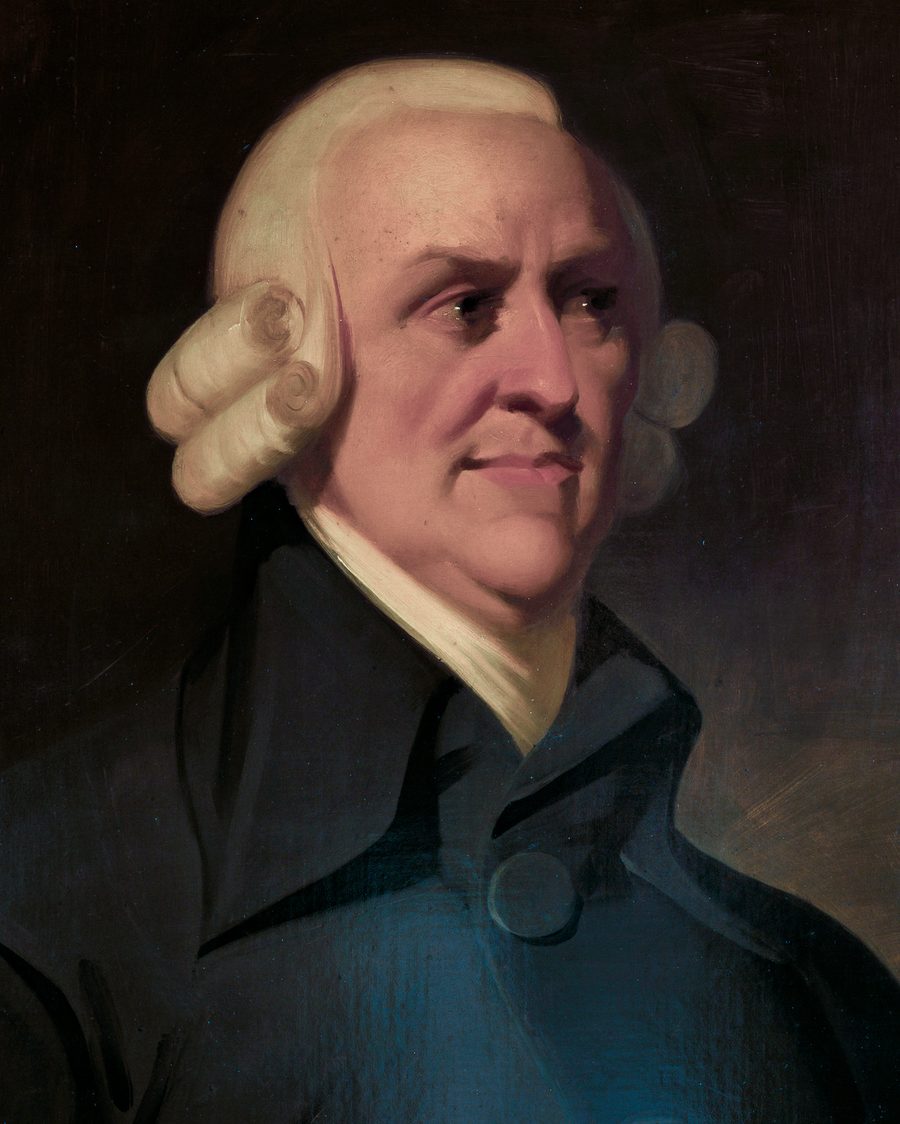 Adam Smith1755 lecture, reported by Dugald Stewart