Politics
Uber: when liberalisation depends on the iPhone
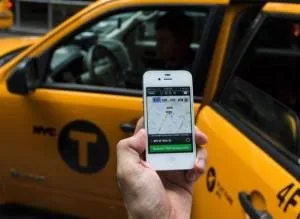
The fight between Uber and taxi drivers has by now spilled over into society and the media. Everyone knows Uber, the smartphone app that lets any customer book a ride and anyone with a car step into the shoes of a taxi driver. Hence the dispute: taxi drivers won’t have it and are rebelling against the arrival on the market of competitors with whom they are forced to share it. The reasons brandished by taxi drivers – who are obviously fighting tooth and nail to defend the privileges afforded to them by the monopoly in which they operate – are many, and these are what public opinion and politicians have been debating in recent days. I want to set out two of them here, the most debated and the ones that most often cause confusion.
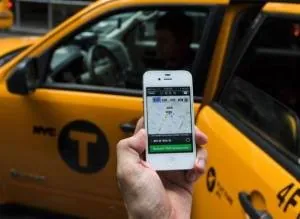
The licence. This is the main bone of contention between taxi drivers, Uber and the legislator. The licence is the main shield behind which taxi drivers barricade themselves whenever the legislator tries to liberalise their sector. The line usually goes like this: “I, the taxi driver, paid you, the State, 100–150 thousand euros to work; now you can’t let others enter the market for free.” But is that really so? Not at all! Many people don’t know that taxi licences are granted by the municipality through a free public competition. A taxi driver who decides to stop working then resells the licence at a high price to someone else who wants to take up the same profession, who will do the same at the end of his career, and so on. What emerges is a private trade in licences much like the secondary market on which financial securities are traded, where the State asks for (or pockets) not a cent and private parties are the only actors. Licence prices are so high because supply is scarce. Municipal competitions issuing these licences are in fact very rare, which reduces the number of licences originally granted for free and subsequently circulating on the “market”. In this way, a taxi driver who paid 100, 200 thousand euros or more for the licence will try to resell it at the end of his career at a similar or higher price, feeding a market of scarce licences in which sellers ask exorbitant prices. So the State charges nothing; by keeping the licence requirement for taxi drivers, it simply allows this market in licences to go on existing. To sum up, there are people who originally obtained an asset free of charge, then sold it at a high price to third parties, who did the same with yet other taxi drivers, creating this costly private trade in permits with the indirect complicity of the legislator, which requires taxi drivers to hold a licence and at the same time lets them sell licences to one another at exorbitant prices. And let’s be honest: if an aspiring taxi driver is willing to pay such sums for a licence, it is obviously because he knows it guarantees him access to a closed market where profits will soon repay the cost; a privilege they are careful not to give up, hence the strikes, the city blockades and assorted uproar. “We taxi drivers pay more taxes!” Erm… it wouldn’t seem so. Let’s look at the facts. It is certainly a fact that with Uber payments are made by smartphone, and therefore electronically, which means every transaction is recorded and traceable. And for taxis? A study by the Bank of Italy, on page 26, notes the following: “Assessing taxi drivers’ actual incomes, which could be a relevant variable for the regulator, is complicated by the category’s exemption from the obligation to issue tax receipts. According to Revenue Agency data, the average income declared by a taxi driver was 11,482 euros in 2004 (compared with 20,345 euros for a metalworker) and 13,800 in 2005. In Bologna the average income declared by the category in 2005 was 6,184 euros. These figures appear to contrast with the high value of licences observed on the secondary market. Moreover, tax inspections reveal an evasion rate in the sector of around 70 per cent, with drivers declaring an average annual mileage 37 per cent lower and an average fuel cost 22 per cent lower than the real ones. Tax audits have also uncovered evasion relating to the buying and selling of licences amounting, between 2000 and 2003, to 19.6 million in Lombardy and 18.8 million in Lazio.” It is true that the study is a few years old and has not been updated since, but it is also true that, as the saying goes, thinking ill of others may be a sin but is often right, so nothing leads us to think things have changed today. A few recent taxi rides support this view. The situation is very clear: on stage we have taxi drivers who would like to keep their monopoly of the market. Objecting by brandishing licence prices is ridiculous, since no doctor prescribes becoming a taxi driver, nor does any law require paying an outrageous price to a private individual to obtain a licence, given that it is granted free through the regular municipal competition. It is the same principle whereby an entrepreneur certainly doesn’t expect the State to refund the capital invested in his company if business goes badly. Opposition based on the taxes paid by taxi drivers seems misplaced, given the Bank of Italy’s figures. The question here is: what does the legislator want to do? Because if the State’s task is to secure the common good (assuming the common good can or should be secured by the presence of the State, but let’s not digress), in this situation we have a poor, or at least backward, service that refuses to innovate, since it refuses to compete with those offering the same service at higher quality, and so it is consumers who pay the price, condemned to worse and expensive transport services. What is more, by allowing prices to be set in the absence of competition, they will remain stuck at a level that is not optimal for consumers as a whole, shutting out of the service both those unwilling to pay such prices for a ride and those who cannot afford it. Finally, let us bear in mind that nobody is asking taxi drivers to shut up shop; they are simply being asked to be more competitive, improving the quality of the service they offer and bringing down the prices they charge. Refusing a competitive situation from the outset amounts to claiming the right to offer poor services at high prices without bearing the burden of improving, which strikes me as rather arrogant. Nobody benefits from not liberalising the taxi service, except taxi drivers themselves. At this point, relaunching the hashtag I adopted on Twitter during the European taxi strike against Uber seems a must: #iononTassisto
@MilaneseXcaso
Views expressed in articles are the authors' own and do not necessarily represent those of the association or of Bocconi University.
One of the great mistakes is to judge policies and programs by their intentions rather than their results.
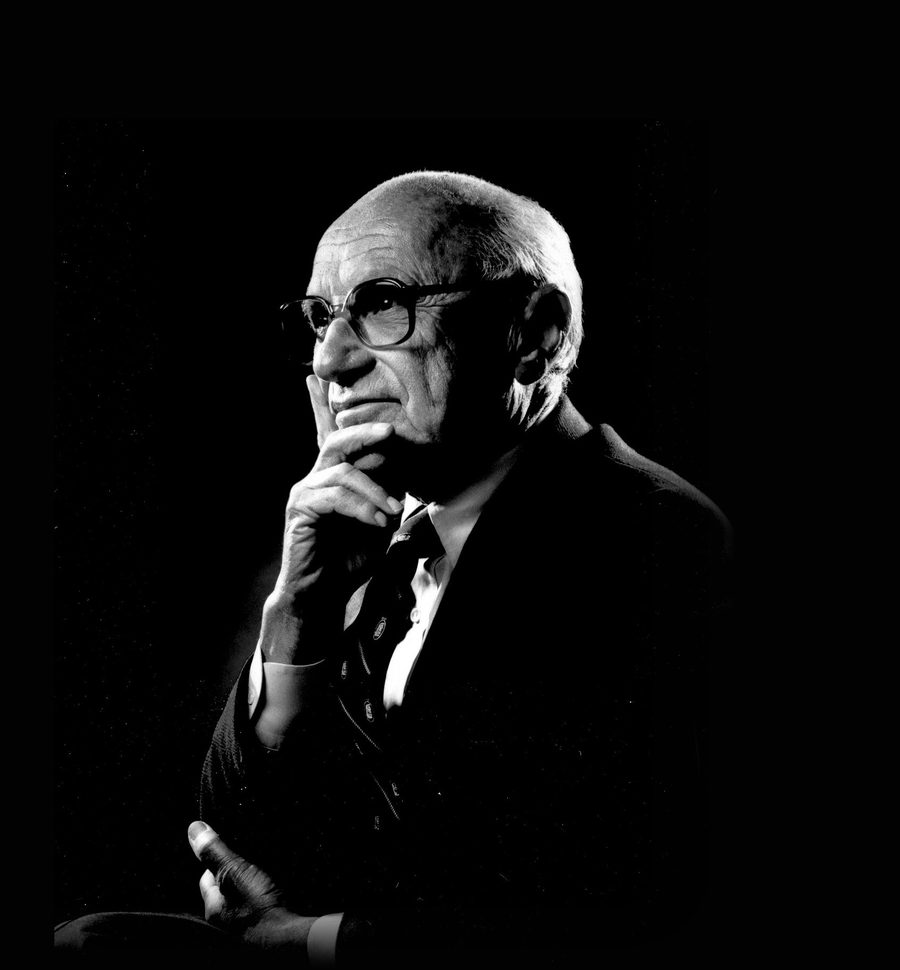 Milton FriedmanInterview on The Open Mind, 1975