Politics
“Taxi drivers versus Uber”: chronicle of a death foretold
For those who don’t remember, the title refers to Gabriel García Márquez’s novel in which everyone knew what was going to happen except the victim (perhaps). In the same way, here in Italy we are witnessing a clash, between the government and taxi drivers, that everyone knew was coming. Everyone except (perhaps) those involved.
But let’s start from the beginning.
The taxi drivers’ strike in some of the country’s main cities, such as Turin, Rome and Milan, is nothing but the umpteenth attempt by the trade to protect its privileges and to block any kind of entry into a market that is vital to the economies of our big cities. So why was this crisis so predictable? Well, anyone with a basic grasp of economics knows that free competition encourages innovation and improves the quality of the services users receive. That said, there has always been a school of thought (called the planned economy) holding that the state knows better than anyone how to organise the production and delivery of services; the pity is that wherever it has been put into practice, it has also often failed.
But let’s get to the point: years ago, Italian lawmakers decided to give themselves the final say on transport. They established their right to grant, for a fee or free of charge, permission to drive a taxi to anyone wishing to take up the job, thereby creating high barriers to entry and, as a result, a secondary market for licences (which, being few, have reached exorbitant prices). Taxi drivers take out loans to afford a licence and pass this extra fixed cost on to the consumer. In this way it is the end user who has to bear the cost of the lawmakers’ foresight.
Because of this artificial distortion, prices are much higher than they could be in a competitive market, quality is worse, supply is limited and users are trapped with no alternatives.
Now we understand why taxi drivers are protesting against Uber, or rather against the law that would allow it (or them, if we are talking about the Uber workers) to enter the market: by lowering prices, increasing supply and diversifying services, Uber would increase competition. A heavy blow to the profits of a caste that has monopolised the market for years.
This was a death foretold (fortunately): monopolies usually survive only if the law protects them. Some say the change is unfair because “some people are still paying off their licences”, but can we punish consumers because someone else made a bad investment? Today the strike is hurting thousands of passengers, and “the Guarantor” [I don’t know who that is; news broadcasts and newspapers treat it like Manzoni’s Unnamed – it should be the Commission for guaranteeing the implementation of the law on strikes in essential public services - ] says it is illegal. Since when is it illegal to freely choose not to carry on one’s business? Is it illegal when the hairdresser doesn’t open? Or when the bakery doesn’t bake?
OK, I don’t want to go off topic and get the usual “6 – –” in red ink my high-school teachers used to give me, so I’ll close with a line from the novel that could apply both to taxi drivers and to our lawmakers’ protectionist laws:
He died without understanding his death.
Views expressed in articles are the authors' own and do not necessarily represent those of the association or of Bocconi University.
The more the state "plans" the more difficult planning becomes for the individual.
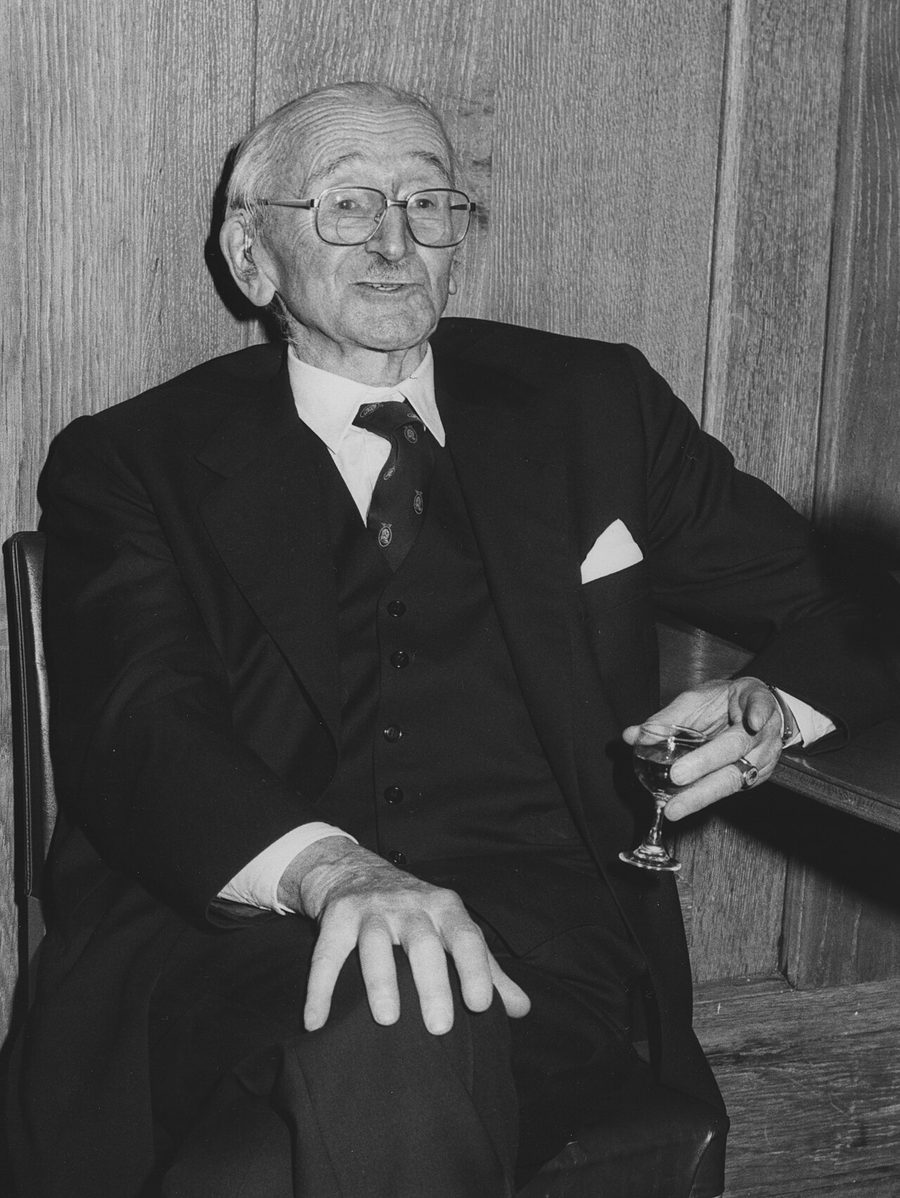 Friedrich A. von HayekThe Road to Serfdom, 1944