Politics
Adam Smith: father of liberalism?
One of the few certainties in the quarrelsome world of the history of economic thought is that Adam Smith fathered the free-market ideal in economics. Or at least it was, until recently. A growing number of scholars from outside the liberal tradition dispute the Scottish philosopher's faith in individualism, the cornerstone of liberal thought1.
It is time, then, to look again at Smith's thought, to understand why he came to be universally recognised as the father of economic liberalism and what drives some modern thinkers to challenge that label.
Any study of Smith's thought has to start from his best-known work, “The Wealth of Nations”, published in 1776, when Smithian thought had reached full maturity and Britain was going through the first industrial revolution.
Why economists traced the first major theory of laissez faire back to “The Wealth of Nations” in particular is easy to grasp from the first of the five books that make up the work, “Of the Division of Labour”. As the title suggests, Smith attributes the industrial revolution precisely to the process of the division of labour. Human beings, he argues, have a natural propensity to exchange. One could write a whole other essay on the origin of this disposition, which the author links to the faculty of speech. In any case, the disposition exists, is found only in man and in no other species, and over the centuries has led humans from a condition in which every adult is self-sufficient, as indeed happens in the animal world, to a commercial society based on exchange between people.
Capitalism thus appears to be man's natural condition, and the industrial revolution not merely a historical phase, as Marx would later argue, but the outcome of a natural process that had been building up over the centuries.
In modern commercial society, then, we depend on other people, but certainly not on their benevolence: «It is not from the benevolence of the butcher, the brewer, or the baker that we expect our dinner, but from their regard to their own interest.» Every man must therefore make sure that there is demand for the fruits of his labour, so that he can exchange them for other goods he needs.
In the second book (the Italian title is “Sulla natura dei fondi”, but the English original, “On the nature, accumulation & employment of stock”, sums up its content better), Smith deals with the accumulation of capital. Whereas the previous book was mainly devoted to the simple exchange of goods, he now turns to the accumulation of capital and its productive use in investment.
This is where the all-too-often quoted metaphor of the “invisible hand” appears: the force that drives savers to invest their capital in those commercial activities that prove efficient and profitable. According to Smith, who holds that savings and investment are exactly equal, savers, though they care only about increasing their own capital, are led to support the most efficient productive activities in their country. This is how the investor, the capitalist, contributes to the good of society as a whole, even though that is not his real aim: he seeks only to increase his own well-being.
But Smith's most famous argument for laissez faire is found in the fourth book, “Of Systems of Political Economy”. It is his attack on mercantilism, which was promoted, curiously enough, by another father of liberalism: John Locke. In his “Second Treatise of Government”, Locke argued for the importance of money as a store of value because of its non-perishable nature. In doing so he justified the mercantilist policies pursued by most European countries at the time.
Smith, by contrast, argued that the sole function of money is to circulate consumer goods, and in doing so he set in motion the process that led Britain, albeit only in 1846, to repeal the corn laws, the symbol of the mercantilist system, and to embrace the free market.
Man's natural propensity to exchange, the beneficial effects of private enterprise and the merits of international trade, which is not to be seen as a zero-sum game, are all contained in this book. It therefore seems justified to regard “The Wealth of Nations” as the first manifesto of economic liberalism.
The arguments of those who support an illiberal Smith are to be found instead in another work, “The Theory of Moral Sentiments”, published in 1759. Although it predates “The Wealth of Nations” by almost twenty years, it would be wrong to claim that Smith had repudiated its conclusions by the time he wrote his most famous work. The author's private correspondence shows that he kept revising and annotating “The Theory of Moral Sentiments” until his death.
But what does this work contain that is so important that, in some people's view, it shakes the reading of Smith as a liberal thinker? The book offers far more keys to interpreting the Smithian philosophical framework than “The Wealth of Nations” does. It shows that Smith rejects methodological individualism, the doctrine according to which every phenomenon, economic ones included, must be explained in terms of individual actions and preferences: the philosophical conception underlying the thought of later authors such as Schumpeter, Hayek and Popper.
In this essay Smith treats as obvious, needing no proof, the human inclination to feel compassion for one's fellows, as well as the existence of a “bond of benevolence” between people. But Smith goes even further, arguing that human beings exist only in relation to the society in which they live. Society acts as a mirror in which the individual builds an image of himself.
In the Theory of Moral Sentiments, Adam Smith describes a moral system founded on the principle of sympathy, which involves identifying with the passions and feelings of others, and which differs from benevolence and altruism while not replacing self-interest.
If it is true, then, that “The Theory of Moral Sentiments” provides the ethical, philosophical, psychological and methodological foundations of Smith's thought and of his later works too, it would seem that Adam Smith is indeed not an individualist, at least in ethics.
Going back to “The Wealth of Nations”, however, how does this new “illiberal” identity of the author (illiberal because he does not support individualism) change our reading of the work?
In the book Smith states that private enterprise, motivated by self-interest, benefits society as a whole, that free trade between nations is preferable to protectionism and, more generally, that man is naturally inclined to exchange and free trade. The fact that “The Wealth of Nations” clearly sets out all the elements that became the cornerstone of liberal economic thought is certainly not changed by a new reading of its author's philosophical apparatus. On the contrary, does the fact that Smith produced these ideas, even though some scholars claim they contradict his ethical system, not strengthen his conviction in them?
All this, of course, assumes that there really is a contradiction between non-individualism in ethics and liberalism in economics, an issue that would need further reflection.
Whatever Smith's philosophy was, we must not forget that he took an active part in the great national debate on economic policy that took place in Britain between the eighteenth and nineteenth centuries.
Smith's belief in the ideal of the free market, which he himself did not live to see prevail, since the corn laws were repealed only in 1846, more than fifty years after his death, therefore appears firm, untouched by the admittedly interesting speculations about his philosophical system.
Views expressed in articles are the authors' own and do not necessarily represent those of the association or of Bocconi University.
The more the state "plans" the more difficult planning becomes for the individual.
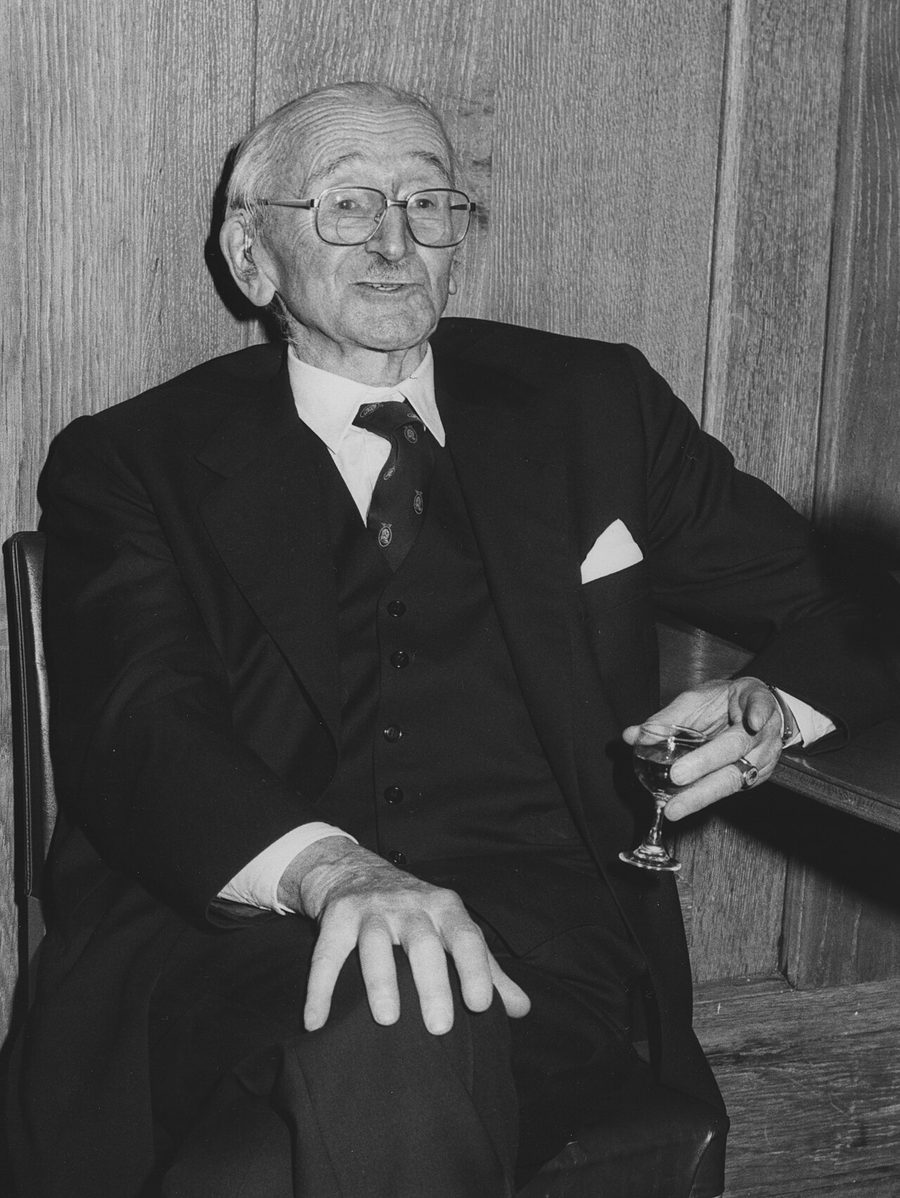 Friedrich A. von HayekThe Road to Serfdom, 1944